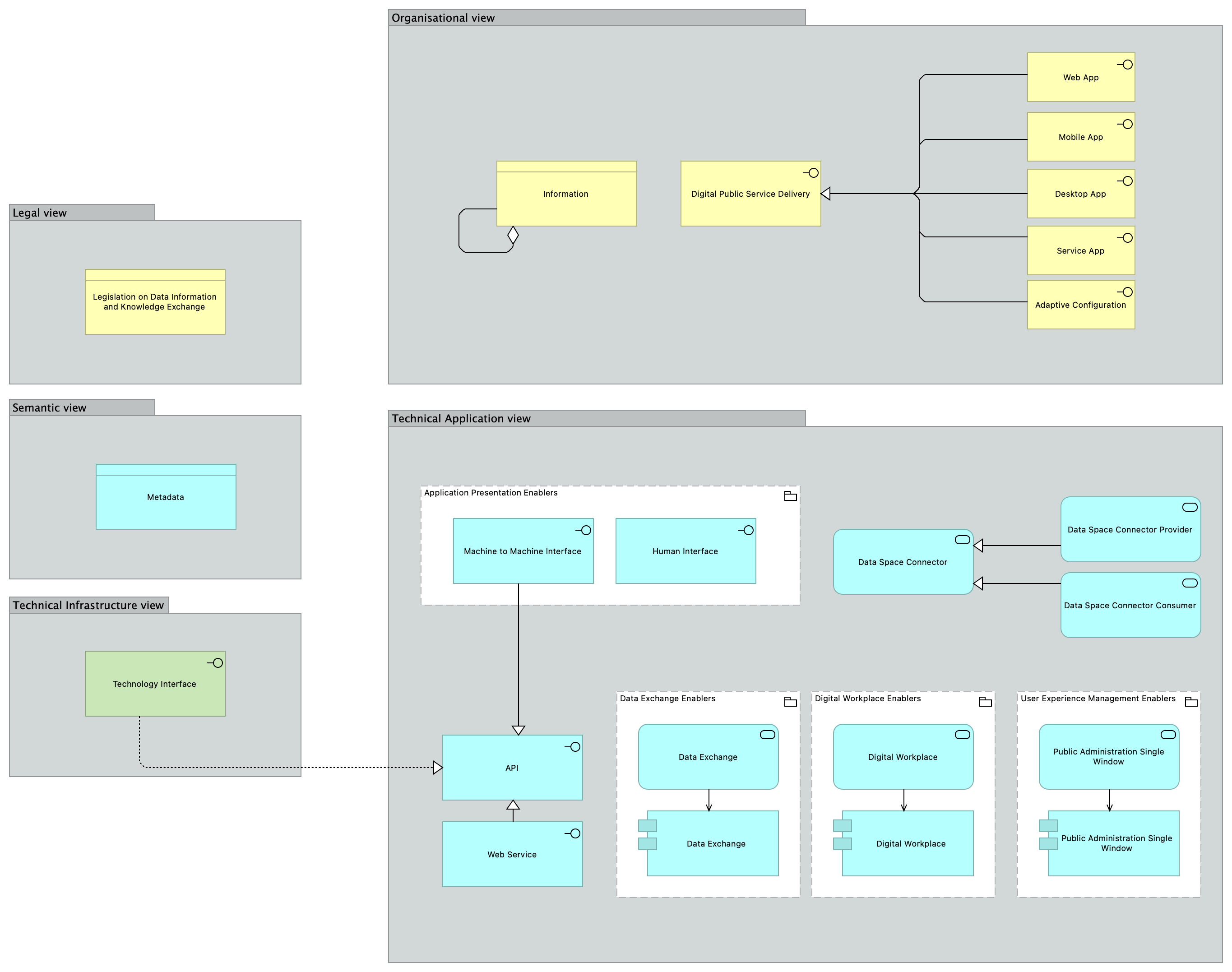
The Interoperability Behavioural Viewpoint describes the runtime behaviours and interaction patterns that enable interoperability within and across digital public services.
It captures how organisational actors, systems, and technical enablers collaborate through processes, interfaces, and protocols to exchange data, information, and knowledge in a legally compliant, semantically consistent, and technically interoperable manner.
In this viewpoint, organisational, legal, semantic, and technical interoperability aspects are made explicit through corresponding model elements. Organisational behaviour is expressed through digital public service delivery and its use of information across multiple channels. Legal interoperability is captured through legislation governing data, information, and knowledge exchange. Semantic interoperability is ensured through metadata enabling shared meaning. Technical interoperability is represented through grouped application-level enablers in the Technical Architecture View and realised at runtime through technology interfaces and APIs in the Technical Infrastructure View.